
Jack White Guitar Rig: Triplecaster, Pano Verb and Fuzz
Jack White’s guitar rig is more useful to study as a set of performance controls than as a shopping list. Fuzz supplies weight, pitch effects change the register, and switches turn abrupt changes into part of the rhythm. The interesting question is not simply which boxes he owns, but what each lets him do while playing.
This guide focuses on the setup documented in Premier Guitar’s October 2024 walkthrough with technician Dan Mancini, alongside manufacturer specifications. It is a dated rig snapshot, not a claim that every item remains on his stage today.
From the Airline to the Triplecaster


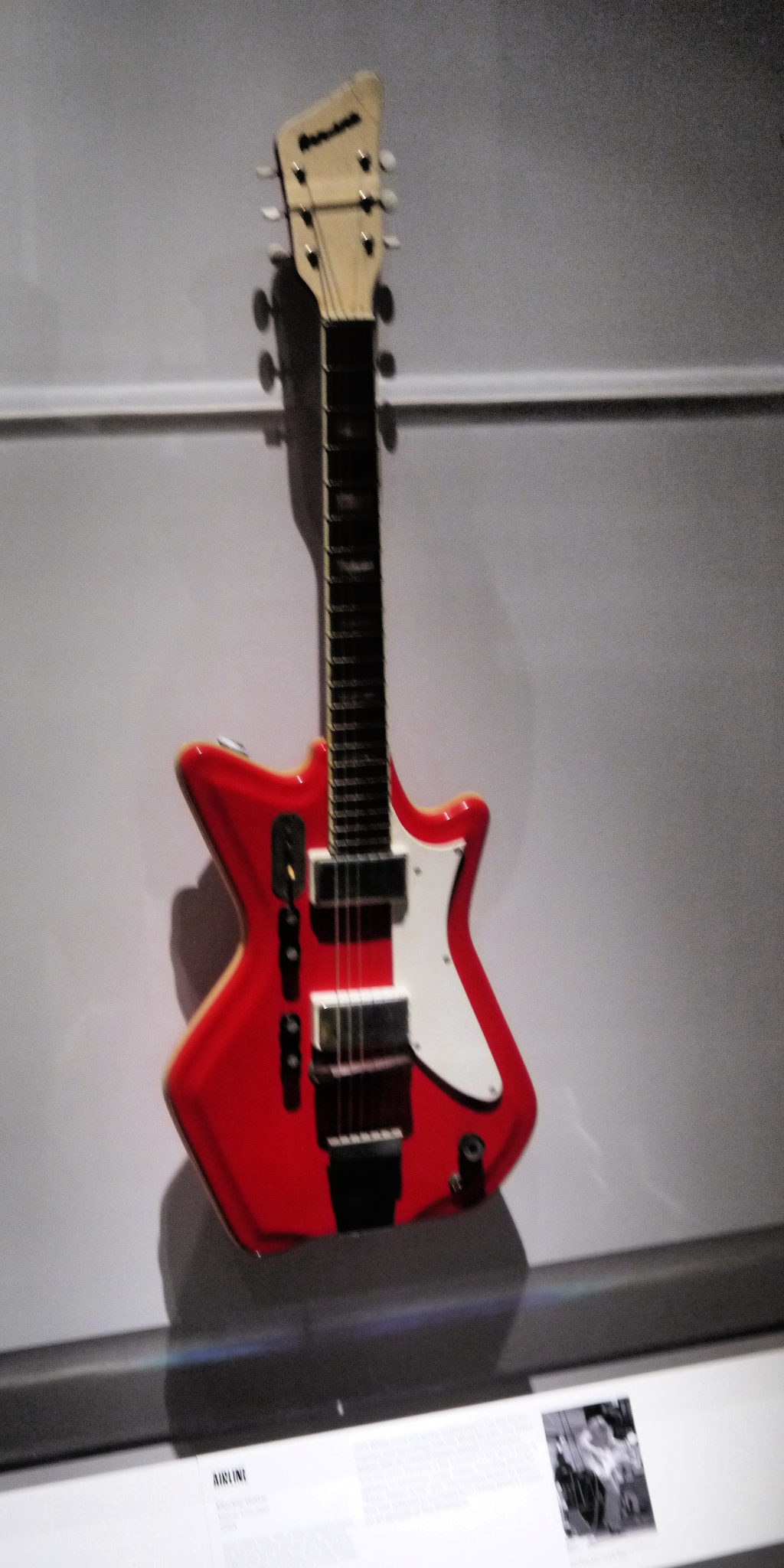
The red Airline remains a compelling piece of guitar design: you can recognize its silhouette before reading a logo. But treating it as the answer to every Jack White tone question mixes different eras together. The 2024 touring setup offers a much more elaborate control surface.
Fender’s production Triplecaster Telecaster combines a bridge Jack White humbucker, middle JW-90 single-coil and neck CuNiFe Wide-Range humbucker. A Bigsby vibrato, Hipshot Xtender DropTuner and killswitch add ways to alter a phrase without reaching for a pedal. Fender also fitted a banjo-style armrest and white hardware against a Piano Black finish. These are the specifications of the signature instrument, not a generic Telecaster with a different paint job. Source: Fender’s signature-collection announcement.
There is an important distinction between the shop model and White’s own guitar: Mancini’s walkthrough identifies a B-bender on White’s personal Triplecaster that the production version does not include. The same tour also featured a customized Jazzmaster with an Electro-Harmonix Pitch Fork built into its body. Source: Premier Guitar.
The Pano Verb: stereo movement inside one amplifier
The Fender Pano Verb puts two different speakers in one cabinet: a 15-inch Jensen C15N and a 10-inch Jensen P10R. Its combined output is 70 watts, using two 6L6 and two 6V6 power tubes. The reverb’s Full/Split switch can send the effect to both speakers or only the 10-inch speaker. A built-in adjustable boost adds another gain option. Source: Fender’s Pano Verb specifications.
Do not confuse stereo operation inside the amplifier with three amplifiers running together. In the documented 2024 arrangement, White had three Pano Verbs onstage but used one at a time: one for electric guitar, one for the Kay archtop and one as backup. Source: Premier Guitar.
The practical lesson is to separate movement from volume. Before adding more gain to a home rig, try a little tremolo or reverb. A changing envelope or a different sense of space can make a repeated figure more dramatic without making every note more distorted.
Fuzz gives the riff its weight


The documented board includes a rehoused Electro-Harmonix Big Muff, DigiTech Whammy, CopperSound Triplegraph and several other effects. This is a selective guide, not a complete wiring diagram. Source: Premier Guitar.
On a standard Big Muff Pi, Volume sets output level, Sustain changes distortion and sustain, and Tone shifts the balance from bass-heavy to treble-heavy. EHX also warns that high sustain settings can expose hum from inadequately shielded pickups or cables. Source: EHX operating instructions.
For a useful starting exercise, match the pedal’s engaged volume to its bypassed level first. Then increase Sustain only until held notes have the length you want. Play a short riff with rests, not a continuous chord, while adjusting Tone. If you cannot hear where the notes stop, back off the gain and work on muting before adding another pedal.
Pitch effects are instruments, not decorations


A Whammy-style expression pedal makes the journey between pitches playable. For example, the Whammy DT lets the treadle control the selected pitch-bend interval; its separate drop-tuning section can move the signal by semitones or an octave. That is a different gesture from simply stepping on a fixed octave sound. Source: DigiTech.
The Triplegraph takes another approach. Developed by CopperSound and White, it has separate telegraph keys for octave down and octave up. Its middle key operates a killswitch or auxiliary effects loop, and the octave controls offer momentary or latching operation. Source: CopperSound.
Try the distinction in musical terms: hold one note and sweep to another register, then repeat the phrase with an octave effect switched on only for the last beat. The first creates a bend; the second creates punctuation. Neither needs a complicated riff to make its point.
A stripped-down practice rig
You do not need to reproduce the entire touring board to explore these ideas. Use the equipment you already have and build three clearly different sounds:
- Foundation: a dry sound with enough definition to make rests and accents obvious.
- Weight: a fuzz or distortion sound that sustains without swallowing the attack.
- Disruption: an octave or pitch effect used for a particular beat, note or section.
As an experiment, place pitch shifting before fuzz and listen to how clearly the notes track, then reverse the order and compare. This is a practice suggestion, not White’s verified routing or a promise of an exact album tone. Record both versions at the same volume. The winning arrangement is the one that makes your phrase more convincing.
White’s documented rig rewards that kind of active playing. Rather than leaving everything on, make a small number of changes count: a sudden register jump, a clipped ending, a sustained note after a dry passage. The contrast is the part worth borrowing.
Watch the documented rig
Watch Premier Guitar’s Jack White Rig Rundown with Dan Mancini for the instruments, modifications and full pedalboard tour.
Explore more players in our guitar rigs artist directory.