
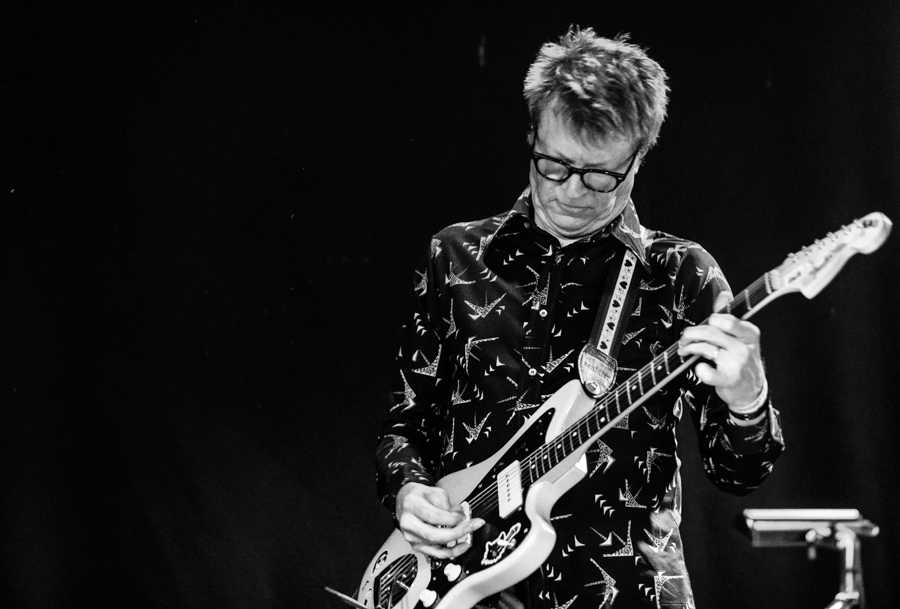
Nels Cline’s Guitar Rig: Wilco Jazzmasters, Expressive Pedals and Cruel Country
Nels Cline’s guitar rig is a good reminder that a pedalboard can be more than a row of on/off switches. With Wilco, the guitar can supply a melody, a sheet of noise, a shimmer behind the vocal or a sound that barely resembles a guitar at all. The interesting question is what each piece of the rig lets him do.
This guide separates documented setups by era. The 2012 touring rig, Cline’s 2013 effects commentary and the equipment reported for Cruel Country in 2022 are different snapshots, not a claim about his current touring inventory.


2012 Wilco touring rig: Jazzmasters and a Schroeder amp
Premier Guitar’s January 2012 rundown documented a Jazzmaster-centered setup, with alternatives including a Gibson Les Paul Junior for slide and open tunings, a Jerry Jones Neptune twelve-string and a double-neck instrument. Cline sometimes plays behind the bridge, one reason the Jazzmaster’s extra length of string is useful to him.
The amp was a Tim Schroeder-built DB7 feeding a Marshall 4×12 cabinet. The effects extended beyond the floor: a second, tabletop setup offered more hands-on control.
Selected pedals in that rig included the Z.Vex Fuzz Factory, DigiTech Whammy, BOSS CS-3, Klon Centaur, BOSS FV-500H and BOSS DD-3 and DD-7 delays. The tabletop collection included an Electro-Harmonix 16 Second Delay and Korg Kaoss Pad 2. See the original 2012 rundown and demonstrations.


Why the volume pedal and compressor matter
In his own 2013 effects column, Cline described the BOSS FV-500 as a tool he uses constantly to shape level and create swells. A volume pedal can take the pick attack out of a chord without changing the notes you play.
Cline also uses the BOSS CS-3 as a clean boost and sustainer, helping him bring out harmonics and the sounds of strings behind the bridge or above the nut. With Wilco, he described using less extreme Fuzz Factory settings for sustained feedback and heavier textures. Read Cline’s explanation of his essential effects.


2022: the Cruel Country recording rig
Premier Guitar’s Cruel Country interview lists a different collection: National resonators, a Duesenberg lap steel, the Neptune twelve-string, a Fano SP6 and his Jazzmaster, alongside a Milkman Creamer with a 12-inch Jupiter speaker.
Reported effects included the Moyo volume pedal, BOSS CS-3, Walrus Audio Voyager, MXR Phase 45, EarthQuaker Devices Disaster Transport and Aqueduct, and Big Foot FX Magnavibe.
One detail varies between reports: the 2012 rundown describes his main Jazzmaster as a 1959, while the 2022 interview identifies “The Watt” as a 1960. Read the 2022 interview and equipment lists.


What to borrow from this rig
Try playing the same two notes with a clear pick attack, then swell into them with the volume pedal. Add compression and listen for whether the quiet harmonics come forward. The useful thing to copy is the way Cline controls a part’s attack and sustain, even if your board is a lot smaller.
Keep exploring: browse more guitarist rigs.